Is Namibia Safe for Self-Driving?
People may have different things come to mind when they think about Africa. Most people in developed countries think that Africa is all bush, where no roads, stores, or hospitals have been built yet. Lots of people also think that Africa is a country, meaning that when you tell them you are going to, say, Namibia, they say, “Aha, Africa.” They think of it as something whole, instead of a collection of different places and cultures, which it truly is. To be exact, the majority of people don’t know where Namibia is.
Namibia is an enchanting country, and that is the perfect word for it. Its magnificent landscapes will leave you in awe. I think I could also watch wildlife endlessly and spend the whole day sitting by a waterhole, watching different animals come for a drink.
To answer the question, “Is Namibia safe for self-driving?” briefly — yes, it is very safe. Namibia ranks 50, which is much higher than the USA at the peace rank of 129. The U.S. Department of State puts it at Level 2: Exercise Increased Caution. But, to compare, so are Spain, the UK, and many more European countries. We drove through this country twice and never had any problems. People are very friendly, helpful, and honest, especially in rural areas. The level of service is high across the hospitality sector, with restaurants, shops, hotels, and car rentals providing speedy and friendly service. If you are prepared for a few little hiccups, then your Namibian vacation will be less stressful. I will give more details now.
Most travelers arrive in the capital city of Windhoek. It is the biggest city in this sparsely populated country, with 250 thousand residents. This will be the most “dangerous” part. I put this word in quotation marks because it is not exactly horrible or bad. Pickpockets do exist, but mostly people are friendly and welcoming. One of the things that exists in the cities and towns is “parking attendants.” These are just people who hold the parking area and ask you for some money to keep an eye on your car. We only encountered one paid parking spot at the mall, where we had to pay 10 NAD if we parked for over 1 hour, and it was a gated parking lot. The rest of the parking spaces are kept by those people who promise to watch your car. I believe it is better to do it because a few coins — we were told to give about 10 NAD, as mentioned above, which is about $0.60 — will give you peace of mind. It is irritating sometimes, but I keep saying to myself that most parking spots in the USA, or for that matter, Europe and beyond, are paid. I also believe that this way, I contribute a little to keeping some poor people fed. You may have a different opinion, but I always think any money I give out while traveling contributes to the local economy. Once, we didn’t have any coins, and the attendant got visibly irritated and went to complain to his fellow “co-workers,” so this was a little stressful.
Another thing to keep in mind is paid toilets. Most of it is just a few coins here and there, like 2 NAD — again, $1 = 17 NAD. This is common for European people but not for Americans.
To complete my list of challenges, I should mention the real one that could be the most important: ATMs in the cities. Most banks and ATMs have guards attached to them, but there is also a mob of people hanging around and watching you, sometimes getting really close. Honestly, guards aren’t really helpful at all. I would recommend going to more private ATMs, not the one that is just on the wall of the building. Also, have someone standing behind you on the lookout. I would also recommend withdrawing money at the airport, in small villages, or at hotels. Like I said, with paid bathrooms and parking attendants, you really want to have some cash on you. However, credit cards are widely accepted.
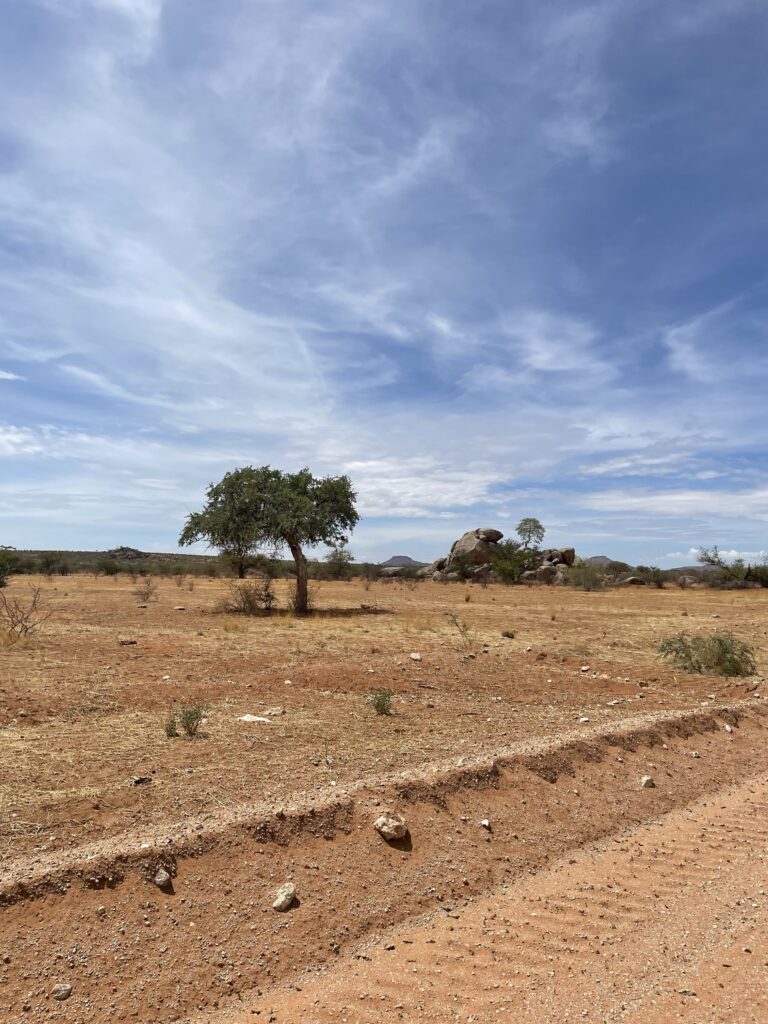
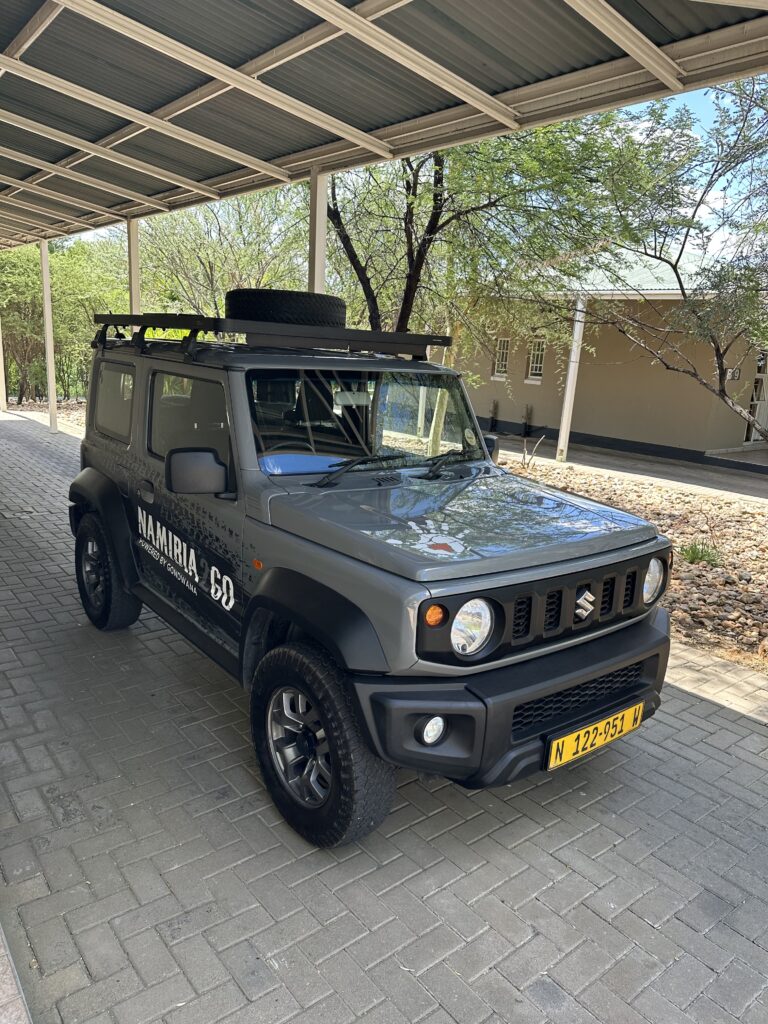
So, coming to the question of how safe it is to self-drive in Namibia, I can say again — very safe. Road conditions are great. It is mostly dry, and even dirt roads are mainly maintained well. There are no unnecessary police stops; however, we got pulled over a few times for document checks and driving without headlights on — keep it in mind — and were let go quickly. There are plenty of tire repair shops, not-so-plenty gas stations, and food stops in towns. There are some areas, like Damaraland, where there is no gas station or shop for hundreds of miles, so always check your distances and make sure you have a double tank — most rental trucks do — or get a spare gas canister or two.
I forgot to mention that most car rental companies will prohibit driving at night. This is mostly because of animals. There are lots of nocturnal animals, and you don’t want to harm them or have them harm you.
I would also like to outline another aspect of safety: medical safety. While cities have modern hospitals with equipment and facilities, small villages may lack quick access to medical care. Helicopters are available, but you also need to have cell phone service, and some areas are very remote and don’t have any coverage. There is an option to rent a satellite phone for about $10–$15 a day. With poisonous snakes, scorpions, and other wildlife, it is something to keep in mind. I would also like to mention something else that worried me — high rates of AIDS. The last data I read said that up to 16% of the population has it. It would be wise to remember and be aware of it. Keep your awareness sharp when going to have a manicure, when having a dental emergency, or during any other medical procedure that may be necessary while traveling. Bringing medication and staying hydrated are other things to remember.
I love Namibia wholeheartedly and can definitely say that it is a great destination for self-driving. Namibia is a safe, friendly, and welcoming country, and if you exercise normal caution and are prepared for little special situations, like parking and bathrooms, you will have a great time. Check out our Namibia self-drives and explore the natural beauty of this gorgeous country.