
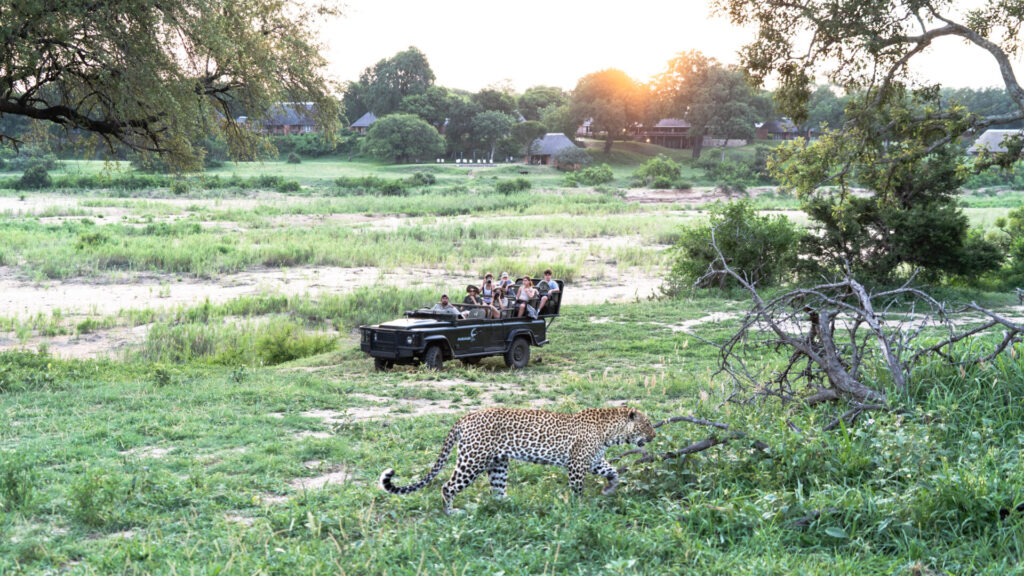
An African safari is a vacation, but it is not always a relaxing vacation.
This is something I think first-time travelers often underestimate. You look at safari pictures and see somebody sitting in a vehicle watching elephants, followed by a beautiful lunch and a sunset with a glass of wine. None of that looks particularly exhausting.
Then you arrive and realize your alarm is going off before 5:30 in the morning, you spend several hours bouncing around on an unpaved road, come back covered in dust, eat breakfast, and a few hours later somebody asks if you are ready to do it again.
So, is safari tiring? Yes, it definitely can be. But I don’t think safari itself is usually the problem. The problem is trying to fit too much safari, too many parks and too many transfers into one trip.
A well-planned safari should be exciting without feeling like an endurance test.
The Early Mornings Are Real
If you are not a morning person, this may be the first surprise.
Many safari days start before sunrise because early morning is one of the best times to look for wildlife. Temperatures are cooler, predators may still be active from the night, and animals often begin moving before the heat of the day.
Depending on the lodge, you may get a wake-up call around 5:00 or 5:30 a.m., have coffee and something small to eat, and be in the vehicle shortly afterward. In South Africa’s Kruger National Park, for example, the official SANParks gate schedule has gates opening as early as 5:30 a.m. during parts of the year, while some camp gates can open even earlier.
One early morning is exciting. Six early mornings in a row, particularly after flying across several time zones, can start feeling very different.
Jet lag is worth considering here too. The CDC Yellow Book guide to jet lag explains that crossing time zones can cause daytime sleepiness, disturbed sleep and general fatigue, and that sleep loss during the journey can make the symptoms worse.
This is one reason I don’t love itineraries that land after an international flight and immediately start an intensive safari schedule. If possible, give yourself a little room to adjust.
Sitting in a Safari Vehicle Is More Tiring Than It Sounds
You are sitting down, so how tiring can it really be?
Quite tiring, actually.
A morning game drive might last three or four hours. A full-day safari can keep you out for most of the day, and transfer days between parks can mean many additional hours in the vehicle. Our guide to what a typical safari day is really like explains the different schedules in more detail.
Safari roads are not highways. They can be rocky, sandy, muddy, corrugated or full of holes, and you are often in an open vehicle. Even on a good road, you are constantly looking from side to side, standing or leaning for photographs, listening to your guide and searching the landscape for movement.
The CDC’s current African safari travel guidance specifically notes that some remote parks involve long drives to reach wildlife and that road conditions in safari areas can be rugged.
For me, the mental part matters too. You are paying attention all day. There may be 30 quiet minutes and then suddenly your guide spots something, everybody turns around, cameras come out and the whole vehicle is focused again.
It is a very different type of tired from walking around a city all day, but it is still tired.
Then There Is Dust, Heat and Weather
Safari advertising doesn’t spend much time showing dust.
During dry season, you may drive for hours on dirt roads behind other safari vehicles. Your shoes get dusty, your clothes get dusty, your camera gets dusty and somehow there will eventually be dust in places you didn’t think dust could reach.
Heat can make the experience more tiring as well, especially in an open vehicle or during walks. The CDC’s travel guidance for hot climates recommends drinking enough fluids, resting periodically and scheduling outdoor activity during cooler parts of the day when possible.
But don’t assume Africa will always be hot.
Early-morning drives in Southern Africa can be surprisingly cold, especially during the dry winter months. You may leave camp wrapped in a blanket and jacket, then several hours later be taking layers off because the sun is suddenly very warm.
So part of safari fatigue can simply come from being outside and exposed to the elements for much more of the day than you normally are at home.
Changing Camps Every Night Makes Everything Worse
This is probably the itinerary mistake I dislike the most.
On paper, moving every day looks productive. You see Moremi, then Khwai, then Chobe, then another reserve, and it feels like you are getting more for your money because the list of destinations is longer.
In reality, every move means packing, checking out, transferring, arriving, checking in, unpacking and learning a new camp. Even when the transfer itself includes wildlife viewing, you are still living out of a bag and changing environments constantly.
This is exactly why I usually recommend spending at least two or three nights in important safari areas. In our guide to how many days you need for an African safari, I recommend roughly four to six full or partial wildlife days for many first-time travelers rather than trying to fill every day of a long African trip with game drives.
I know the temptation to add another park because it is “only four hours away.” But four hours there, four hours somewhere else two days later, and another transfer after that can easily turn your expensive safari into a tour of African roads.
Full-Day Game Drives Are Great, but Not Every Day
A full-day drive can be one of the best days of a safari.
You leave in the morning with breakfast or lunch, travel deeper into the reserve and don’t have to turn around just because the lodge is serving lunch. If something interesting is happening, you can stay.
I love that flexibility. I just wouldn’t necessarily schedule it every single day for somebody who has never been on safari before.
There is a big difference between being in a vehicle for eight hours because you are following wild dogs and being in a vehicle for eight hours because the itinerary says “full-day game drive.” The first can feel like five minutes. The second can feel like twelve hours.
A good itinerary leaves some room to decide.
Safari Fatigue Is Also About Repetition
There is another kind of tiredness that has nothing to do with your body.
On your first game drive, you may photograph every zebra.
Then you see another zebra. And another zebra. By Day 6, you may be sitting quietly while somebody else in the vehicle takes their 150th zebra picture.
This does not mean you suddenly stopped liking wildlife. It means humans get used to things surprisingly quickly, even things they flew across the world to see.
This is why I don’t think a longer African trip should necessarily mean more consecutive game drives. Kenya can combine wildlife with lakes and the coast. South Africa can combine a private reserve with Cape Town and wine country. Namibia naturally mixes safari with deserts, mountains and the Atlantic coast, while Zimbabwe and Botswana can add Victoria Falls, river cruises and water-based wildlife experiences.
The best trips have a rhythm rather than a checklist.
Travel Days Matter More Than People Expect
When somebody sends me a 10-day safari itinerary, I don’t just count the number of destinations. I look at how long it actually takes to get between them.
This matters enormously in Africa because distances can be deceptive. A place that doesn’t look far away on a map may involve several hours on slower roads, while remote safari camps in Botswana may require small bush flights and transfers on both ends.
Even within Kruger, SANParks publishes a dedicated table of travel times between gates and camps and specifically tells travelers to allow additional time for stops.
Now add an international flight before the safari and another one afterward.
If you are coming from the United States, your first day in Africa may already follow a very long journey. That is why I don’t consider arrival and departure days to be real vacation days when deciding whether an itinerary is rushed.
You Don’t Have to Do Every Game Drive
This may be the most useful advice in this entire article.
If your lodge includes two game drives a day, you don’t have to attend all of them.
You already paid for it, I know. Missing something that is technically included can feel like wasting money. But if you are exhausted on Day 5 and would rather sleep until 8:30, eat breakfast slowly and spend the morning by the pool, do it.
The lions will survive without you.
More importantly, you may enjoy the next safari much more because you actually rested.
This is one reason we like private African safaris. A private trip can give you more control over the pace instead of requiring you to follow the preferences of an entire group. If you want a later morning, a longer stop at a particular sighting or an afternoon that is deliberately left empty, there is often more flexibility to arrange it.
Of course, private does not mean that park gates, flight times or wildlife suddenly operate according to your personal schedule. But there is generally more freedom to build the trip around the way you actually like to travel.
How I Would Build Downtime Into a First Safari
You don’t need a “rest day” after every game drive. You simply need an itinerary that doesn’t treat every empty hour as a problem that needs to be filled.
For most first-time travelers, I would rather see two or three nights in important locations than a series of one-night stops. I also like mixing full-day wildlife drives with shorter morning and afternoon drives, and adding something different—a boat safari, walking experience, waterfall, beach, town or simply a free afternoon—during longer trips.
This is one reason I particularly like itineraries where the end of the trip naturally slows down. Our 14-day Kenya safari can combine wildlife with time on the Indian Ocean coast, while our Zimbabwe and Botswana safaris can mix traditional game drives with Victoria Falls and river experiences. You are still traveling and seeing something special, but your body gets a break from sitting in the same type of vehicle twice a day.
You do not need to earn your vacation by being exhausted at the end of it.
Who Finds Safari Most Tiring?
There isn’t one type of person.
Children may struggle with sitting quietly for long periods. Some older travelers may be perfectly happy with long drives but find climbing into a high safari vehicle difficult. People who normally sleep late can find repeated 5:00 a.m. wake-ups painful, while serious wildlife photographers may happily stay outside from sunrise to sunset and ask to do it again tomorrow.
That is why I don’t believe in one “perfect” safari schedule.
Before booking, think about how you normally travel. Do you like very active vacations? Do you need an afternoon nap? Do you hate moving hotels? Can you sit in a vehicle for six hours and still be happy? Would you rather spend every available minute looking for animals, or do you also want food, culture, scenery and relaxation?
The answers matter more than how many parks somebody tells you that you “must” see.
Is Safari Tiring? Yes, but It Shouldn’t Ruin the Trip
Safari can absolutely be tiring. There are early mornings, long drives, dust, heat, changing camps and days when you spend far more time sitting in a vehicle than you ever expected.
But none of this means a safari should leave you exhausted.
In my experience, the most tiring safaris are usually the ones that look the most impressive on paper. Too many parks, too many hotels, too many long transfers and every morning and afternoon filled because nobody wants to “waste” a day.
I would rather spend an extra night somewhere good.
You might see less on the map, but you may experience much more.
At One Big Planet, we build customized African safari itineraries around how people actually want to travel, not simply around the maximum number of destinations we can fit between two flights. Tell us how much time you have, how active you want the trip to be and whether you want safari to be the entire vacation or only part of it, and we can build the pace around you.
A safari should leave you tired because you had an incredible day, not because your itinerary never gave you time to stop.