
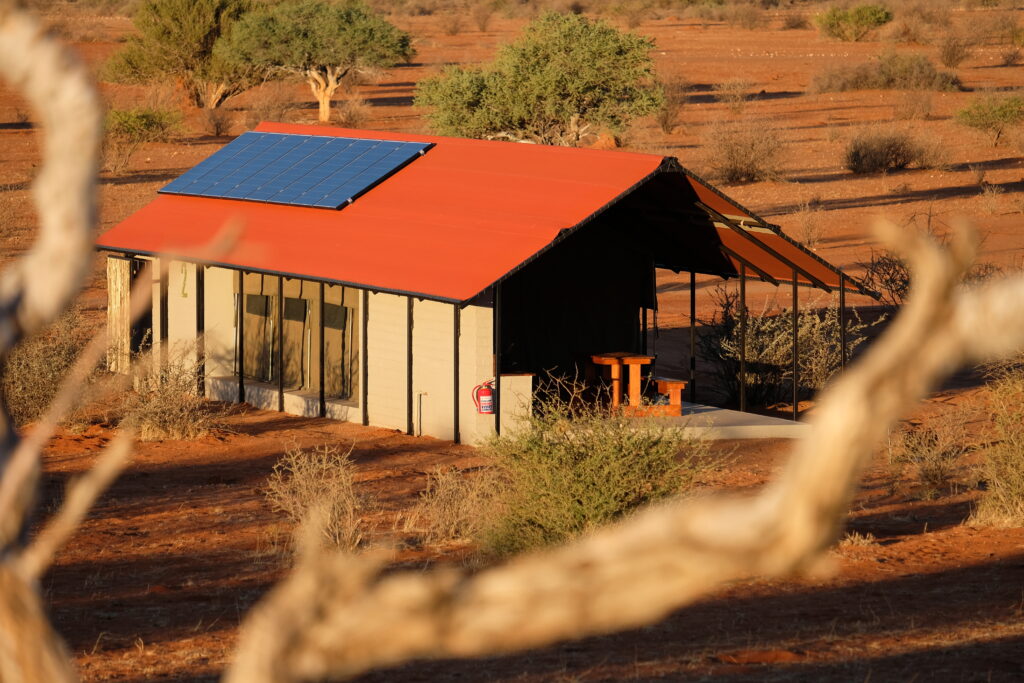
Safari Lodge vs. Tented Camp: Which Is Right for You?
When travelers hear the words tented camp, they sometimes imagine sleeping in a small camping tent with a sleeping bag and a shared bathroom.
That may exist, but it is not what most safari itineraries mean.
A tented safari camp can have a king-size bed, a private bathroom, hot water, electricity, a wooden deck and full restaurant service. Some are simple and close to traditional camping. Others are among the most expensive places to stay in Africa.
A safari lodge usually uses permanent buildings made from stone, brick, wood or concrete. It may feel more like a hotel, although it can still be small, remote and surrounded by wildlife.
The difference is not always about luxury. It is more about construction, atmosphere and how closely you want to feel connected to the bush.
What Is a Safari Lodge?
A safari lodge is a permanent accommodation built in or near a national park, private reserve or other wildlife area.
Rooms may be located in one main building or spread across separate chalets and suites. Depending on the property, a lodge may include:
- Private bathrooms
- Air conditioning or fans
- A swimming pool
- A restaurant and bar
- Electricity throughout the day
- Wi-Fi
- Spa services
- Viewing decks
- Guided game drives
- Bush walks and other safari activities
Lodges range from practical national park accommodations to exclusive private-reserve properties.
South African National Parks, for example, offers everything from standard rest-camp rooms to safari lodges inside protected areas. Its official accommodation listings also show that one park may contain chalets, campsites, permanent safari tents and luxury lodges, all providing very different experiences.
A lodge is usually the easier choice for someone who wants familiar hotel-style comfort in a remote location.
What Is a Tented Safari Camp?
A tented camp uses canvas as a major part of the guest-room structure.
The tents are normally permanent or semi-permanent and may stand on wooden or concrete platforms. They are not necessarily packed away after each guest, and you are not expected to pitch them yourself.
A tented room may include:
- A proper bed and hotel-quality linens
- Furniture and luggage storage
- A private bathroom
- Hot and cold running water
- Flush toilets
- Electricity or solar power
- A deck or veranda
- Mosquito netting
- Indoor or outdoor showers
The official Kenya Wildlife Service accommodation guide separates basic public campsites from privately operated lodges and tented camps. Its private tented properties offer full-service hospitality, dining and guided activities, which is very different from bringing your own camping equipment.
South African National Parks similarly defines safari tents as permanent canvas units on platforms. Some use communal facilities, while others have their own bathrooms and kitchens.
The word tent therefore tells you very little about the actual comfort level.
Is a Tented Camp the Same as Camping?
No.
Traditional camping normally means sleeping in your own or a rented tent, using a campsite and sharing at least some facilities. You may need to bring food, bedding, cooking equipment and other supplies.
A serviced tented camp operates more like a lodge. Staff prepare the room, cook meals, clean the accommodations and organize activities.
There are also camps that fall somewhere in the middle. They may offer comfortable beds and private bathrooms but use limited solar power, bucket showers or scheduled hot water.
Always read the room description rather than deciding based on the word camp.
Which One Is More Luxurious?
Either one can be more luxurious.
A tented camp in Botswana’s Okavango Delta may be far more exclusive than a large permanent lodge outside a national park. Botswana’s official tourism listings include small tented camps with only a handful of rooms, private decks and highly personalized service.
At the same time, a private safari lodge in South Africa may offer large suites, plunge pools, air conditioning, spa treatments and elaborate meals.
Luxury depends on:
- Room size
- Location
- Service level
- Food
- Guide quality
- Number of guests
- Included activities
- Privacy
- Access to wildlife areas
Do not assume that a canvas room is less comfortable or less expensive.
Which Feels Closer to Nature?
A tented camp usually feels more connected to the surrounding environment.
Canvas does not block sound in the same way as solid walls. At night, you may hear insects, birds, wind, hippos, elephants or lions in the distance.
For many travelers, this is exactly why they choose it. You are protected inside a comfortable room, but you still feel that you are sleeping in the wild.
For others, every rustle becomes a reason to stay awake.
A lodge normally creates a little more separation. Solid walls may reduce some outside sound, provide better temperature control and feel more familiar to travelers who are nervous about their first safari.
Neither experience is better. The question is whether the sounds of the bush feel exciting or stressful to you.
Are Tented Camps Safe?
A professionally operated tented camp follows safety procedures just as a lodge does.
The canvas itself is not intended to stop wildlife. Safety comes from the camp’s location, staff, rules and animal-awareness procedures.
In unfenced camps, guests may be required to:
- Remain inside their rooms after dark
- Call or wait for an escort
- Avoid walking alone
- Keep food out of the room
- Keep tent panels secured
- Follow staff instructions when animals are nearby
The same rules may apply at unfenced lodges.
Animals generally move through the area because it is part of their habitat, not because they are trying to enter guest rooms. The most important thing is to stay calm and follow the instructions provided by the camp.
Will Animals Come Close to the Room?
They might.
Elephants may walk between rooms, monkeys may appear near the deck and antelope may feed around the property. At riverfront camps, you may hear hippos at night.
This can also happen at a lodge, especially when it is unfenced.
The possibility of seeing wildlife from your room is one of the attractions of staying inside or near a protected area. Kenya Wildlife Service notes that accommodations located inside parks can give guests earlier access to morning wildlife activity and more continuous immersion in the surroundings.
It is still important not to feed animals, leave doors open or walk outside when the property tells you not to.
Which Has Better Bathrooms?
You need to check the individual property.
A safari lodge will usually have a conventional indoor bathroom. A tented camp may have an equally complete private bathroom, but the design can vary.
You may find:
- A full indoor bathroom
- A bathroom attached behind the sleeping area
- An outdoor shower
- A flush toilet with a bucket shower
- Scheduled hot water
- Shared facilities at simpler camps
Some travelers love outdoor showers. Others do not want to shower while listening for nearby wildlife.
If a private bathroom, flush toilet or enclosed shower is important, ask for that specifically. Do not assume every tented room provides the same setup.
Which Is Better During Hot or Cold Weather?
A permanent lodge generally offers more predictable temperature control.
Solid walls retain temperature differently, and some lodges provide air conditioning, heating or ceiling fans. This may matter during very hot months or during cold winter mornings in Southern Africa.
Tented camps can become warm during the day and cold at night, although many are designed with ventilation, shade and fans. Higher-end camps may also provide air conditioning or cooling systems.
Season and location matter more than the name of the accommodation.
A tent in a shaded riverine forest in Botswana will feel different from a desert tent in Namibia. A stone lodge may still become cold during a winter morning if it has limited heating.
Ask what is provided instead of assuming.
Which Is Quieter?
A lodge is usually quieter inside the room.
Canvas allows you to hear more of what is happening outside, including animals, weather, staff and other guests. Tented camps can also feel less private when rooms are positioned close together.
However, many small tented camps have only a few guest rooms spread far apart. A large lodge may have considerably more people, more vehicles and more general activity.
Check:
- Number of rooms
- Distance between accommodations
- Whether children are accepted
- Whether meals are communal
- Whether the camp is fenced
- Whether generators operate at night
The number of guests often affects the atmosphere more than whether the room has canvas or solid walls.
Which Is Better for a First Safari?
For a first safari, I often recommend trying both.
You might spend several nights at a lodge and then two or three nights at a tented camp. This gives you familiar comfort at the beginning and a more immersive experience once you understand the daily safari rhythm.
Kenya is especially suitable for combining accommodation styles. The country offers permanent lodges, intimate tented camps and simple campsites across its parks and reserves.
A private Kenya safari itinerary can include different properties based on the route, budget and comfort level rather than using the same accommodation style every night.
Which Is Better for Families?
A lodge may be easier for families with young children.
Lodges are more likely to offer:
- Family rooms
- Enclosed buildings
- Pools
- Reliable electricity
- Flexible meal arrangements
- Larger common areas
- Easier movement between rooms
Some tented camps welcome children, while others set minimum ages because of unfenced grounds, walking distances or shared safari vehicles.
Families should also ask whether children are allowed on game drives, bush walks and other activities. Accommodation rules vary by property.
Older children and teenagers may love a tented camp because it feels adventurous without requiring actual camping.
Which Is Better for a Honeymoon?
A small tented camp can be especially romantic.
Fewer rooms, private decks, lantern-lit walkways and the sounds of the bush can create a more intimate atmosphere than a large lodge.
A lodge may be the better choice when the priority is a private plunge pool, air conditioning, spa services or a large suite.
The best honeymoon itinerary may combine both: an immersive tented stay during the safari and a more luxurious lodge or beach property afterward.
Which Is Better in Kenya?
Kenya offers both styles across major safari regions.
In the Maasai Mara and other wildlife areas, tented camps can provide a strong sense of place and easy access to game-drive areas. Lodges may offer more facilities, larger pools and a familiar hotel-style layout.
Your choice should depend on the property’s location as much as the room.
A simple but well-positioned camp inside or close to a reserve may provide a better safari experience than a more luxurious property requiring a long drive to reach the wildlife area.
Kenya Wildlife Service lists both private lodges and tented camps within national parks, including properties in Tsavo, Amboseli and other protected areas.
Which Is Better in Namibia?
Namibia is more lodge-focused on many standard road-trip routes, although tented camps are available.
A guided or self-drive Namibia safari may include desert lodges, national park rest camps, guesthouses and permanent tented accommodation.
Tented stays can work especially well in scenic desert and wilderness areas. Visit Namibia recognizes permanent tented camps and tented lodges as established accommodation categories, not simply basic campsites.
Because Namibia involves substantial driving, comfort, parking, meal arrangements and location should carry more weight than the lodge-versus-tent label.
Which Is Better in South Africa?
South Africa provides one of the widest accommodation ranges.
You can stay in a self-catering national park chalet, a permanent safari tent, a traditional lodge or an all-inclusive private-reserve suite.
The country is a good choice for travelers who want a shorter safari stay with more familiar comforts. Our private South Africa tours and safari stays can combine wildlife accommodations with Cape Town, the Winelands or the coast.
A private reserve lodge may include meals, guided drives and other activities, while national park accommodations may require you to arrange more of the day independently.
Which Is Better in Botswana or Zimbabwe?
Tented camps are an important part of the Botswana safari experience, particularly in remote areas.
Some camps are reached by light aircraft or boat and have only a few guest rooms. This can feel highly exclusive, but the remote setting and logistics may also increase the cost.
The Botswana Tourism Organisation categorizes both lodges and tented camps as established safari accommodations and lists tented properties ranging from minimalist camps to highly luxurious retreats.
Zimbabwe offers a mixture of lodges, hotels and camps. A Zimbabwe and Botswana safari can combine lodge stays near Victoria Falls with more wildlife-focused accommodations around Hwange or Chobe.
Is a Tented Camp Less Expensive?
Not necessarily.
A basic permanent tent may cost less than a lodge room. A small luxury camp in a remote concession may cost much more.
Tented camps can be expensive because they may require:
- Transporting supplies into remote locations
- Generating electricity
- Treating or delivering water
- Employing guides and camp staff
- Operating small aircraft or boat transfers
- Limiting the number of guests
- Including meals and safari activities
Compare what is included rather than comparing room types alone.
Our African safari cost guide explains why location, transportation, park fees and activities often affect the total price more than the word lodge or camp.
Questions to Ask Before Booking
Before choosing a property, ask:
- Is the room a permanent tent or a traditional camping tent?
- Does it have a private bathroom?
- Is the shower indoors or outdoors?
- Is hot water available all day?
- Does the room have electricity?
- Is there air conditioning, heating or a fan?
- Is the property fenced?
- Will staff escort guests after dark?
- How many rooms does the property have?
- Are meals and game drives included?
- How far is it from the main wildlife-viewing area?
- Are children accepted?
- Is Wi-Fi available, and does that matter to you?
These answers are more useful than the accommodation name.
So, Which One Should You Choose?
Choose a safari lodge when you want familiar comfort, solid walls, more facilities and greater separation from the sounds outside.
Choose a tented camp when you want a more immersive atmosphere and enjoy hearing the bush around you.
Choose a mixture when you want both.
I would not select an accommodation only because it looks luxurious in photographs. Location, guide quality, included activities and the number of guests can affect the safari much more than whether the room is made from canvas or stone.
A beautiful lodge far from the wildlife may be less rewarding than a simpler camp in the right place.
One Big Planet creates custom African safari itineraries using accommodations that fit your destination, budget and comfort level. We can combine lodges, tented camps, private reserves, national park stays and beach accommodations within the same trip.
You can also read about how many days you need for an African safari before deciding how many different properties to include.
When you are ready to begin planning, contact One Big Planet to discuss what kind of safari accommodation feels right for you.