If you are planning a Botswana safari, there is a good chance you will eventually have to decide between the Okavango Delta and Chobe National Park.
My first answer would actually be: if you have enough time, visit both.
They are different enough that one does not really replace the other.
The Okavango Delta is the experience I would choose if I wanted remote wilderness, wetlands, small camps and a safari that feels very far away from normal life. Chobe is the easier choice if I wanted spectacular elephant viewing, a boat safari, easier access and perhaps a combination with Victoria Falls.
If you only have time or budget for one, however, there are some pretty clear differences.
Okavango Delta vs. Chobe at a Glance
| Okavango Delta | Chobe | |
|---|---|---|
| Best known for | Wetlands, wilderness and varied safari experiences | Elephants and Chobe River wildlife |
| Landscape | Channels, lagoons, floodplains, islands and woodland | Riverfront, floodplains, woodland and drier interior areas |
| Signature activity | Mokoro and water-based safari | Chobe River boat safari |
| Wildlife | Excellent and diverse | Excellent, especially elephants and buffalo |
| Accessibility | Usually more complicated | Very easy from Kasane |
| Feeling | More remote and intimate | More active and accessible |
| Easy to combine with Victoria Falls? | Possible, but requires more travel | Yes |
| Best for | Immersive Botswana safari | Short safari or multi-country trip |
One thing worth explaining before going further: this is not a perfect apples-to-apples comparison.
The Okavango Delta is an enormous ecosystem, while Chobe is a national park. And Chobe itself is not one single landscape. It includes the famous Chobe Riverfront as well as Savuti, Linyanti and other areas.
When most travelers talk about visiting Chobe, however, they usually mean the Chobe Riverfront near Kasane. That is what I am mainly comparing here.
What Is So Special About the Okavango Delta?
The Okavango is one of those places that sounds strange until you understand how it works.
A huge river flows from Angola into Botswana and, instead of eventually reaching an ocean, spreads into the Kalahari sands.
This creates a massive network of channels, lagoons, marshes, islands and seasonally flooded grasslands.
Even more unusually, much of the annual flood reaches Botswana during the country’s dry season.
UNESCO’s description of the Okavango Delta explains that this unusual timing has created an ecosystem where plants and animals have adapted their life cycles to the arrival of the floodwaters.
It is a UNESCO World Heritage Site and one of the great natural ecosystems of Africa. But that scientific explanation does not really describe what makes it feel different when you are there.
The Delta gives you this strange combination of water and African bush. You may spend the morning looking for lions from a safari vehicle and later move quietly through reeds in a Mokoro. Another day may involve a boat trip through deeper channels, a walking safari or simply sitting at camp watching elephants.
The Botswana Tourism Organisation’s Okavango Delta guide lists game drives, boating and traditional mokoro trips among the major ways to experience the area.
I think variety is probably the Delta’s biggest advantage.
What Is So Special About Chobe?
Chobe gives you a very different experience.
The northern edge of Chobe National Park follows the Chobe River, and during the dry months huge numbers of animals come toward the permanent water.
And then there are the elephants. Botswana is famous for elephants in general, but Chobe is one of the places where you truly understand what that means.
The official Botswana Tourism Organisation guide to Chobe National Park specifically highlights the large herds of elephant and buffalo that gather along the river during the dry season.
Sometimes you are not watching one elephant. Families are coming to drink. Young elephants are playing in the water. Others are crossing between the woodland and river. Then you may turn around and find giraffes, buffalo, antelope or a crocodile on the opposite bank.
A Chobe boat safari is also one of my favorite concepts for a first safari because you are not spending the entire day sitting in a vehicle.
You get on the river and suddenly you are looking at wildlife from a completely different angle.
Which Has Better Wildlife: Okavango or Chobe?
Both. I know that is not a very satisfying answer, but choosing based entirely on an animal checklist is probably the wrong approach.
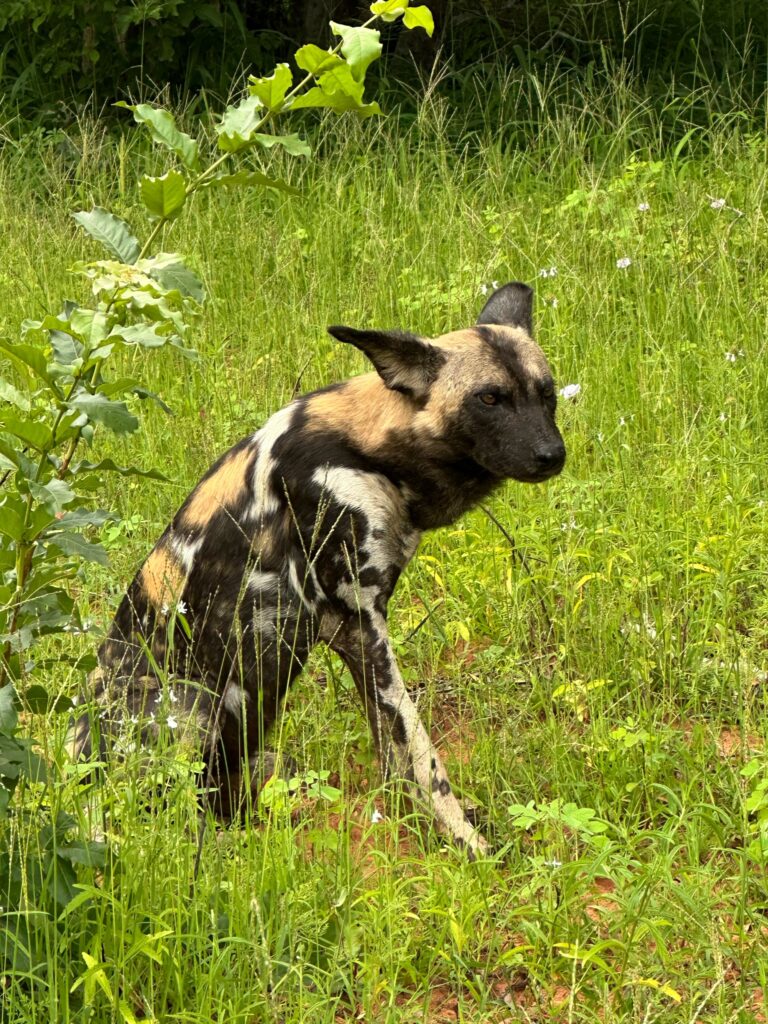
The Okavango Delta has extraordinary wildlife diversity because of the mixture of aquatic and terrestrial habitats. UNESCO records populations of lion, African wild dog, cheetah, elephant and many other mammals, along with an enormous variety of birds, reptiles and fish.
Chobe has excellent general wildlife as well, but its obvious specialty is large concentrations of elephants and buffalo along the river.
So I would think about it this way:
Choose Chobe if seeing elephants is near the top of your list.
Choose the Okavango if you want the overall ecosystem and safari experience to be as important as individual species.
But of course, wild animals do not follow our vacation plans. You could have an unbelievable predator sighting in Chobe and spend an entire afternoon looking at elephants in the Delta.
That unpredictability is part of safari.
Which Is Better for Water Safaris?
This is another case where both have water, but the experience is different.
In Chobe, the classic experience is a motorized boat safari on the Chobe River. You can cover a reasonable distance, watch animals coming down to drink and get close views of hippos, crocodiles and water birds from the boat.
In the Okavango, the iconic experience is a Mokoro. A Mokoro is a narrow traditional-style canoe that is pushed through shallow waterways using a long pole. It is slower and much quieter than a motorboat.
You are not necessarily doing it because it produces the greatest number of animal sightings. You are doing it because floating quietly through papyrus and reeds is one of those experiences that makes the Okavango feel like the Okavango.
The Delta also offers motorized boating in areas where the channels are sufficiently deep.
If water activities are important to you, I would give the Okavango the advantage for variety, but Chobe probably wins if what you specifically want is wildlife viewing from a larger boat.
Which Feels More Remote?
The Okavango. And for some travelers, that alone may justify the extra cost.
Many Delta camps are reached by small aircraft and are surrounded by wilderness. You can be far from towns, paved roads and normal infrastructure. That remoteness is part of what you are paying for.
Chobe Riverfront is much easier to reach. Kasane sits immediately beside the park and has an airport, hotels, shops and road connections.
The Botswana Tourism Organisation describes Kasane as the gateway to Chobe National Park, with both game drives and boat cruises easily arranged from town.
That makes Chobe incredibly convenient. But convenience has a trade-off. The Chobe Riverfront is also one of Botswana’s most visited safari areas. During busy periods, popular sightings can attract multiple vehicles and there is simply more tourism activity around Kasane.
If your idea of Botswana is being somewhere extremely remote where you almost forget the outside world exists, I would choose the Delta.
Which Is Easier and Cheaper?
Usually Chobe.
You can fly directly into Kasane, stay near the river and access Chobe National Park by road and boat.
You can also reach Kasane relatively easily from Victoria Falls.
By contrast, many Okavango itineraries involve flying from Maun to remote safari airstrips aboard small bush aircraft. Those flights are fantastic—the aerial view of the Delta is part of the experience—but they add expense.
This is one reason Botswana safari prices can vary so dramatically. Our African safari cost guide explains how transportation, remote camps, accommodation and safari style affect the final price.
If you have a limited budget but still want to experience Botswana, I would seriously consider Chobe.
You can get an excellent wildlife experience without committing to an expensive multi-camp fly-in safari.
Which Is Better for a First Safari?
I would happily recommend either, but for different travelers.
Chobe may be easier for a first safari because the logistics are simple and the wildlife can be extremely rewarding.
It is also easy to mix a morning game drive with an afternoon river cruise, so the safari doesn’t feel repetitive.
The Okavango would be my choice for a first-time traveler who already knows that the safari itself is going to be one of the main events of the trip.
If you have traveled all the way to Botswana specifically because you want to experience one of Africa’s great wilderness areas, I would make room in the budget for the Delta.
What About the Time of Year?
Season matters in both places. One of the fascinating things about the Okavango is that its flood does not simply follow Botswana’s local rainy season. Water travels down from the Angolan highlands and the Delta’s annual flood arrives during Botswana’s dry winter period. This is one of the features UNESCO identifies as fundamental to the ecosystem.
That means you can have dry weather and rising water at the same time.
Chobe is also particularly impressive during the dry season because animals become increasingly dependent on the river. Botswana Tourism notes that large elephant and buffalo herds gather along the riverbank during the dry winter months.
This does not mean you should refuse to travel outside the dry season.
Green-season Botswana can be beautiful, birdlife can be excellent, landscapes become much greener and prices may be lower.
But what the Delta or Chobe looks like in February can be very different from what you see in August or October.
This is why I would choose dates first and then decide exactly where in Botswana to spend those dates rather than assuming one destination is always better.
Can You Visit Both Okavango and Chobe?
Yes, and in my opinion this is the best solution if your budget and schedule allow it.
A Botswana itinerary can start around Maun and the Okavango Delta, travel through wildlife areas such as Moremi, Khwai and Savuti, and eventually finish near Chobe and Kasane.
Even the official Botswana Tourism information for Moremi Game Reserve notes that Moremi is often combined with Chobe.
You don’t necessarily have to fly between every lodge either. A mobile safari can move through several of these wildlife areas while your camp moves with you. This creates a completely different experience from flying between permanent luxury lodges.
If you are trying to figure out how much safari is enough, our guide to how many days you need for an African safari may help.
For Botswana specifically, I would rather spend two or three nights in each important area than try to race through the entire country.
Chobe Is Especially Easy to Combine With Victoria Falls
This is one of Chobe’s biggest advantages.
Kasane is close to the borders with Zimbabwe and Zambia, and Victoria Falls is close enough to make the two destinations a very natural combination.
You can spend several days on safari in Chobe and then continue to Victoria Falls without adding another major flight.
Our 8-day Zimbabwe and Botswana safari does exactly this, combining Victoria Falls, Hwange National Park and Chobe with game drives and a Chobe River cruise.
If you want a varied first trip to Southern Africa rather than a Botswana-only safari, I think this combination makes a lot of sense.
So, Okavango Delta or Chobe?
If I had to simplify the decision:
Choose the Okavango Delta if:
- You want a more remote wilderness experience.
- Botswana itself is the main purpose of your trip.
- You want mokoro, boating and land-based safari experiences.
- You like small camps and being far away from towns.
- You are willing to spend more for the experience.
- You have enough time for several nights in the Delta.
Choose Chobe if:
- You particularly want to see elephants.
- You want a great boat safari.
- You have fewer days.
- You want easier logistics.
- You have a more limited budget.
- You want to combine Botswana with Victoria Falls.
And choose both if you can.
I don’t think visiting Chobe after the Okavango feels like seeing the same place twice. Chobe’s wide river, huge elephant gatherings and easier-going river safari feel very different from being deep inside the waterways and floodplains of the Delta.
The mistake would be trying to squeeze both into three days simply because they both have famous names. Give wildlife destinations enough time to surprise you.
Planning an Okavango Delta and Chobe Safari
One Big Planet can build both destinations into a customized Botswana itinerary, or combine Botswana with Victoria Falls, Zimbabwe, Namibia or South Africa.
You can explore our private tours to Botswana and Zimbabwe as a starting point. The itinerary can then be adjusted around the number of days you have, the season, your budget and whether you prefer permanent lodges, a mobile safari or a combination of both.